Startseite

Forum

Ratgeber

Gruppen

Nützliche Adressen

Gemeinschaft

Rezepte

Kolumne

paralles54
09:55 paralles54 hat ein Thema kommentiert Rusalka auf Männerfang:  This comment really nails my thoughts on some longer performances! I've definitely had similar experiences where the content is great, but the runtime just becomes a bit much. It's like playing Infinite Craft for hours – fun, but you sometimes need a break before diving back in.
athiasa
03:21 athiasa hat ein Thema kommentiert Mag der Hund jetzt spielen?:  Aww, that's such a classic! The anticipation in that simple question is almost palpable. It reminds me of the excitement when you're about to dive into something fun and engaging. Speaking of which, have you ever tried to manage that same anticipation while playing Eggy Car? It's surprisingly addictive!
falcome
15.09.2026 12:20:51 falcome hat ein Thema kommentiert Mag der Hund jetzt spielen?: Danke für die coolen Casino-Apps, aber ich spiele lieber auf bewährten Seiten, da man dort mehr Möglichkeiten findet und es für mich bequemer ist. Zum Beispiel spiele ich oft dundee slots casino auf dieser Seite https://dundeeslots-osterreich.com/ und habe bereits erste große Gewinne erzielt.
knocs632
14.09.2026 14:52:54 knocs632 hat ein Thema kommentiert Lernen bei einer Ausstellung:   NURS FPX 4025 Assessment 2: Using Problem Analysis to Improve Nursing Practice Healthcare professionals encounter complex problems that can affect patient safety, staff performance, care quality, and organizational outcomes. Identifying a problem is only the first step toward improvement. Nurses must also understand why the problem occurs, determine which factors contribute to it, and identify practical strategies for addressing its causes. NURS FPX 4025 Assessment 2 provides an opportunity to examine how structured Problem Analysis can support evidence-based nursing practice and lead to meaningful improvements in healthcare. Recognizing Problems Within Clinical Practice The first stage of problem analysis is recognizing that a problem exists. Clinical problems may appear as medication errors, communication failures NURS FPX 4025 Assessment 1, delays in treatment, inadequate documentation, patient falls, infection risks, or gaps in patient education. Nurses are often among the first professionals to notice recurring problems because they work closely with patients and participate in daily care activities. However, observations should be supported by relevant evidence whenever possible. Clearly defining the problem prevents healthcare teams from addressing symptoms without understanding the larger issue. Defining the Core Issue A well-defined problem statement provides direction for further analysis. Instead of describing a concern in broad terms, nurses can identify what is happening, who is affected, where it occurs, and why it matters. For example, saying that "patient care needs improvement" is too general to guide an effective intervention. A more focused description might identify a specific communication gap or recurring delay in a particular care process. A clear problem statement helps the healthcare team establish priorities and determine what evidence is needed. Gathering Meaningful Evidence Problem analysis should be based on reliable information rather than assumptions. Nurses can collect data from patient records, incident reports, staff observations, surveys, interviews, quality indicators, and other appropriate sources. Quantitative information can demonstrate how frequently a problem occurs, while qualitative information can provide insight into staff and patient experiences. The combination of different types of evidence can provide a more complete understanding of the issue. Nurses should ensure that collected information is relevant to the identified problem and handled according to organizational policies. Exploring Root Causes One of the most important elements of Problem Analysis is identifying the underlying causes of an issue. A visible problem may have several contributing factors. For example, repeated documentation errors could be associated with unclear procedures, insufficient training, workload pressures, interruptions, or limitations within an electronic documentation system. Tools such as cause-and-effect diagrams, process mapping, and the "five whys" approach can help healthcare teams explore potential causes systematically. Finding root causes allows nurses to develop interventions that address the source of the problem rather than repeatedly treating its consequences. Examining Contributing Factors Healthcare problems rarely have a single cause. Individual behavior, team communication, organizational policies, technology, workload, staffing, environmental conditions, and available resources may all contribute. A thorough analysis considers these factors without automatically blaming individual employees. A systems-based perspective recognizes that healthcare outcomes are influenced by the environment in which professionals work. Understanding multiple contributing factors can lead to more sustainable solutions. Prioritizing the Most Important Concerns Healthcare organizations may face several problems simultaneously, but resources are often limited. Nurses and leaders therefore need to determine which issues require immediate attention. Priority can be influenced by factors such as patient-safety risk, frequency, severity, number of people affected, organizational impact, and feasibility of intervention. Prioritizing problems helps healthcare teams focus their efforts where they are most likely to produce meaningful improvements. Developing Evidence-Based Solutions After analyzing the causes, nurses can explore potential solutions supported by reliable evidence. Interventions should address the identified contributing factors and be realistic within the healthcare setting. Possible strategies may include staff education, revised procedures, improved communication systems, workflow changes, additional monitoring, or technology-based solutions. Stakeholder input is valuable during this stage. Nurses, patients, administrators, and other healthcare professionals may identify practical considerations that are not immediately apparent. Strengthening Team Communication Communication is frequently connected to clinical problems. Misunderstandings, incomplete handoffs, unclear responsibilities NURS FPX 4025 Assessment 2, and delayed information can affect patient care. Problem analysis can reveal communication gaps and help teams determine where improvements are needed. Standardized communication methods, structured handoffs, team meetings, and clear documentation can support better information exchange. Effective communication also encourages staff members to report concerns without fear of unnecessary blame. Implementing and Monitoring Change Identifying a solution is not enough. Healthcare organizations must implement changes carefully and monitor their effects. Nurses can help establish measurable goals and determine how progress will be evaluated. Appropriate indicators might include error rates, patient outcomes, compliance levels, response times, or patient feedback. Monitoring allows healthcare teams to determine whether an intervention is working. If results are not satisfactory, the strategy can be modified based on new evidence and observations. Encouraging a Culture of Continuous Improvement Problem analysis should be viewed as an ongoing process rather than a one-time activity. Healthcare environments change continuously, and new challenges can emerge as patient populations, technologies, policies, and workflows evolve. A culture of continuous improvement encourages nurses to identify concerns, examine evidence, test solutions, and evaluate outcomes. Leadership support is essential because staff need adequate time, resources, training, and communication to participate effectively. Connecting Problem Analysis With NURS FPX 4025 Assessment 2 NURS FPX 4025 Assessment 2 can help nursing students understand how structured analysis contributes to quality improvement and patient safety. Problem Analysis connects clinical observations with evidence-based decision-making. By defining problems clearly, collecting relevant evidence, identifying root causes, prioritizing risks, implementing solutions, and evaluating outcomes, nurses can contribute to meaningful improvements in healthcare delivery. This process also demonstrates the importance of collaboration. Complex healthcare problems often require input from multiple professionals rather than relying on one person's perspective. Conclusion Problem Analysis is an essential skill for nurses who want to improve healthcare quality and patient outcomes. A structured approach helps professionals move beyond identifying symptoms and investigate the underlying causes of clinical and organizational challenges. For NURS FPX 4025 Assessment 2 , understanding Problem Analysis demonstrates how nurses can use evidence, critical thinking, communication, and teamwork to address healthcare concerns. When problems are carefully analyzed and solutions are continuously evaluated, healthcare organizations can strengthen patient safety, improve efficiency, and create a stronger foundation for high-quality nursing practice.
 
derpington
05.11.2020 15:07:52 derpington hat einen Ratschlag gegeben Ratgeber: Spirale schon ausprobiert?!
derpington
05.11.2020 15:06:30 derpington hat einen Ratschlag gegeben Ratgeber: Gewissheit bekommst du nur beim Arzt.
malou
26.02.2015 17:17:09 malou hat einen Ratschlag gegeben Ratgeber: tut mir leid :/ such im internet nach einer selbsthilfegruppe vielleicht gibt es eine in deiner nähe oder ein internetforum. ansonsten kannst du deinen arzt danach fragen vielleicht hat er eine lösung für dich.
malou
26.02.2015 17:12:26 malou hat einen Ratschlag gegeben Ratgeber: nicht jeder bekommt sie oder alle 4... ich hatte drei wurden jedoch alle entfernt. du kannst deinen zahnarzt oder kieferorthopäden fragen und ggf eine zweitmeinung einholen. wenn sie weh tun würde ich sie schon entfernen lassen viel glück
 
Musiker
Für alle die Musik in all ihren Facetten lieben
News Update
Für alle, die gerne unterwegs sind!
Serienjunkies
Für Leute die süchtig nach Fernsehserien sind
Ich möchte alles erleben
Für alle, denen das nicht reicht, was sie bereits kennen und wissen. Für die, die gerne ausgefallene Sportarten machen oder sich gerne in verschiedene Richtungen weiterbilden wollen. Und natürlich auch für die, die sich hier ein paar dementsprechende Ideen einholen oder Erfahrungen austauschen möch
 
 
13.09.2010  |  Kommentare: 0

Jochen Rindt - Der posthume Weltmeister

Jochen Rindt - Der posthume Weltmeister
Die Formel 1-Legende 40 Jahre nach seinem Tod.

Wenn man in der ältern Generation nach Jochen Rindt fragt, können viele noch etwas zu dem Namen sagen. In der jüngeren Bevölkerung kennt man zwar den Namen vielleicht noch, Details zur Person aber eher weniger.

Wer war er, und warum ist Jochen Rindt nach wie vor ein Mythos?

Jochen Rindt wurde am 18. April 1942 in Mainz geboren, seine Eltern kamen im Feuersturm ums Leben und so wuchs er bei seinen Großeltern in Graz auf. Hier beginnt einer seiner Mythen: Jochen Rindt hatte nie die österreichische Staatsbürgerschaft, fuhr jedoch jedes Rennen mit einem österreichischen Fahrerausweis für Österreich.

Schon in seiner Jugend war er nicht der Ruhigste, er besuchte ein Gymnasium in Graz und diese baten ihn, zum Halbjahr doch die Schule zu wechseln, am besten weit weg von Graz. Diesem Wunsch folgten er und sein Freund Helmut Marko und kamen so ins Internat nach Bad Aussee. Jochen Rindt fand schon früh sein Talent zum Motorsport und holte sich dadurch auch das eine oder andere Strafmandat ab.

Seine Karriere im Motorsport begann 1962, als er von einem Grazer Alfa Romeo Händler einen Wagen zur Verfügung gestellt bekam und damit das prestigeträchtige Tourenwagenrennen in Wien Aspern gewann. 1964 begann er dann in der Formel 2 zu fahren. Damals war es noch üblich, dass auch Formel 1-Piloten in der Formel 2 fuhren, und so kam es, dass er in der Formel 2 Toppiloten der Formel 1 schlug. Dadurch machte er in der internationalen Motorsportwelt auf sich aufmerksam. Ein Jahr danach bot ihm John Cooper einen Platz in der Formel 1 an, den Jochen Rindt annahm. Mit einem eigenen Ferrari gewann er das 24 Stunden Rennen von Le Mans mit Masten Gregory, und seine Popularität in Österreich stieg zusehends.
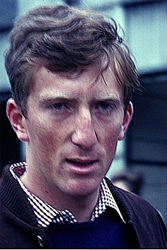
Jochen Rind war nicht nur Rennfahrer, sondern auch ein sehr guter Geschäftsmann, und so eröffnete er 1965 die erste „Jochen Rindt Show“, die zu einem grandiosen Erfolg wurde. 1967 kam dann auch die Veränderung in seinem privaten Leben: Er heiratet Nina Lincoln, die Tochter eines Rennkollegen. In diesem Jahr gewann er in der Formel 2 neun von zwölf Rennen und bekam von der Motorsportpresse den Titel „König der Formel 2“ verliehen.

1969 wechselte er in das Team von Lotus. Zu dieser Zeit wurde mit viel zu hohen Heckflügeln experimentiert und beide Lotus-Fahrer verunglückten. Jochen Rindt zog sich einen Nasenbruch zu, erholte sich aber schnell wieder. Anschließend, im Jahr 1970 war Jochen Rindts beste Saison, er gewann die Rennen in Monaco, den Niederlanden, Frankreich, England und Deutschland. Beim Rennen in den Niederlanden verunglückte sein enger Freund Piers Courage tödlich und Jochen Rindt dachte laut übers Aufhören nach. Sein damaliger Freund Ecclestone riet ihm, wenn er aufhören möchte, dann sofort, und nicht zu warten, bis Saisonende war. Das Rennen in Österreich verlor Jochen Rindt gegen seinen größten Gegner Jacky Ickx. Um endlich den WM-Titel zu erhalten, nach Punkten lag er vorne, stieg dadurch der Druck, in Monza zu gewinnen, ins Unermessliche.

Im Training am Samstag, den 5. September 1970 kam es zur Tragödie. Jochen Rindt starb in der Parabolica Kurve. Die Unfallursache war eine gebrochene Bremswelle. Jacky Ickx hatte nach wie vor die Chance, Weltmeister zu werden, da noch einige Rennen ausständig waren, jedoch fehlten ihm bis zum Ende Punkte auf den Titel.

Somit wurde Jochen Rindt posthum Weltmeister. Seine Witwe Nina Rindt nahm den Weltmeisterpokal für ihn entgegen.

Als 1969 Rindt zu Lotus wechselte, meinte Berni Ecclestone, dass er bei Lotus entweder stirbt oder Weltmeister wird. Beides traf ein.

Jochen Rindt zählt nach wie vor zu den größten Rennfahrern der Formel 1 und ebnete mit seiner Karriere vielen österreichischen Rennfahrern den Weg zur Formel 1, nicht nur Niki Lauda betont diese Tatsache immer wieder. Sein Todestag hat sich heuer zum 40sten Mal gejährt, trotzdem blieb sein Mythos über die Jahre hinweg aufrecht.

Zu seinem 40sten Todestag hat die Galerie Westlicht Jochen Rindt eine Fotoausstellung gewidmet. Es wird auch ein Dokumentarfilm über ihn im Wiener Metrokino sowie im Grazer Annenhofkino gezeigt.

(at)

Fotos: Lothar Spurzem


Kommentare

Facebook automatisch im meinem Facebook-Profil anzeigen
Twitter automatisch im meinem Twitter-Profil anzeigen 

die-frau.com

Der Mann des Tages


Rezept der Woche

Zitronenmarmelade

Kolumne  
Marvel(lous)!

On Thursdays, we're Teddybear Doctors

Marvel(lous)!

Umfrage Weiter nach alle

Ich kaufe mir Kleidung...

Nützliche Adressen Verzeichnissuche