Startseite

Forum

Ratgeber

Gruppen

Nützliche Adressen

Gemeinschaft

Rezepte

Kolumne

knocs632
14.09.2026 14:52:54 knocs632 hat ein Thema kommentiert Lernen bei einer Ausstellung:   NURS FPX 4025 Assessment 2: Using Problem Analysis to Improve Nursing Practice Healthcare professionals encounter complex problems that can affect patient safety, staff performance, care quality, and organizational outcomes. Identifying a problem is only the first step toward improvement. Nurses must also understand why the problem occurs, determine which factors contribute to it, and identify practical strategies for addressing its causes. NURS FPX 4025 Assessment 2 provides an opportunity to examine how structured Problem Analysis can support evidence-based nursing practice and lead to meaningful improvements in healthcare. Recognizing Problems Within Clinical Practice The first stage of problem analysis is recognizing that a problem exists. Clinical problems may appear as medication errors, communication failures NURS FPX 4025 Assessment 1, delays in treatment, inadequate documentation, patient falls, infection risks, or gaps in patient education. Nurses are often among the first professionals to notice recurring problems because they work closely with patients and participate in daily care activities. However, observations should be supported by relevant evidence whenever possible. Clearly defining the problem prevents healthcare teams from addressing symptoms without understanding the larger issue. Defining the Core Issue A well-defined problem statement provides direction for further analysis. Instead of describing a concern in broad terms, nurses can identify what is happening, who is affected, where it occurs, and why it matters. For example, saying that "patient care needs improvement" is too general to guide an effective intervention. A more focused description might identify a specific communication gap or recurring delay in a particular care process. A clear problem statement helps the healthcare team establish priorities and determine what evidence is needed. Gathering Meaningful Evidence Problem analysis should be based on reliable information rather than assumptions. Nurses can collect data from patient records, incident reports, staff observations, surveys, interviews, quality indicators, and other appropriate sources. Quantitative information can demonstrate how frequently a problem occurs, while qualitative information can provide insight into staff and patient experiences. The combination of different types of evidence can provide a more complete understanding of the issue. Nurses should ensure that collected information is relevant to the identified problem and handled according to organizational policies. Exploring Root Causes One of the most important elements of Problem Analysis is identifying the underlying causes of an issue. A visible problem may have several contributing factors. For example, repeated documentation errors could be associated with unclear procedures, insufficient training, workload pressures, interruptions, or limitations within an electronic documentation system. Tools such as cause-and-effect diagrams, process mapping, and the "five whys" approach can help healthcare teams explore potential causes systematically. Finding root causes allows nurses to develop interventions that address the source of the problem rather than repeatedly treating its consequences. Examining Contributing Factors Healthcare problems rarely have a single cause. Individual behavior, team communication, organizational policies, technology, workload, staffing, environmental conditions, and available resources may all contribute. A thorough analysis considers these factors without automatically blaming individual employees. A systems-based perspective recognizes that healthcare outcomes are influenced by the environment in which professionals work. Understanding multiple contributing factors can lead to more sustainable solutions. Prioritizing the Most Important Concerns Healthcare organizations may face several problems simultaneously, but resources are often limited. Nurses and leaders therefore need to determine which issues require immediate attention. Priority can be influenced by factors such as patient-safety risk, frequency, severity, number of people affected, organizational impact, and feasibility of intervention. Prioritizing problems helps healthcare teams focus their efforts where they are most likely to produce meaningful improvements. Developing Evidence-Based Solutions After analyzing the causes, nurses can explore potential solutions supported by reliable evidence. Interventions should address the identified contributing factors and be realistic within the healthcare setting. Possible strategies may include staff education, revised procedures, improved communication systems, workflow changes, additional monitoring, or technology-based solutions. Stakeholder input is valuable during this stage. Nurses, patients, administrators, and other healthcare professionals may identify practical considerations that are not immediately apparent. Strengthening Team Communication Communication is frequently connected to clinical problems. Misunderstandings, incomplete handoffs, unclear responsibilities NURS FPX 4025 Assessment 2, and delayed information can affect patient care. Problem analysis can reveal communication gaps and help teams determine where improvements are needed. Standardized communication methods, structured handoffs, team meetings, and clear documentation can support better information exchange. Effective communication also encourages staff members to report concerns without fear of unnecessary blame. Implementing and Monitoring Change Identifying a solution is not enough. Healthcare organizations must implement changes carefully and monitor their effects. Nurses can help establish measurable goals and determine how progress will be evaluated. Appropriate indicators might include error rates, patient outcomes, compliance levels, response times, or patient feedback. Monitoring allows healthcare teams to determine whether an intervention is working. If results are not satisfactory, the strategy can be modified based on new evidence and observations. Encouraging a Culture of Continuous Improvement Problem analysis should be viewed as an ongoing process rather than a one-time activity. Healthcare environments change continuously, and new challenges can emerge as patient populations, technologies, policies, and workflows evolve. A culture of continuous improvement encourages nurses to identify concerns, examine evidence, test solutions, and evaluate outcomes. Leadership support is essential because staff need adequate time, resources, training, and communication to participate effectively. Connecting Problem Analysis With NURS FPX 4025 Assessment 2 NURS FPX 4025 Assessment 2 can help nursing students understand how structured analysis contributes to quality improvement and patient safety. Problem Analysis connects clinical observations with evidence-based decision-making. By defining problems clearly, collecting relevant evidence, identifying root causes, prioritizing risks, implementing solutions, and evaluating outcomes, nurses can contribute to meaningful improvements in healthcare delivery. This process also demonstrates the importance of collaboration. Complex healthcare problems often require input from multiple professionals rather than relying on one person's perspective. Conclusion Problem Analysis is an essential skill for nurses who want to improve healthcare quality and patient outcomes. A structured approach helps professionals move beyond identifying symptoms and investigate the underlying causes of clinical and organizational challenges. For NURS FPX 4025 Assessment 2 , understanding Problem Analysis demonstrates how nurses can use evidence, critical thinking, communication, and teamwork to address healthcare concerns. When problems are carefully analyzed and solutions are continuously evaluated, healthcare organizations can strengthen patient safety, improve efficiency, and create a stronger foundation for high-quality nursing practice.
deneiffert
14.09.2026 09:43:16 deneiffert hat ein Thema kommentiert Eine neue Leidenschaft entdecken:  It's like finding a hidden track on a familiar album, a delightful surprise. Or perhaps, encountering an antique map and deciphering its cryptic symbols leading to untold adventures. The article delves into this very phenomenon, the glorious act of uncovering a new passion. My own similar problem arose when I stumbled upon Buckshot Roulette.
othella
12.09.2026 03:39:57 othella hat ein Thema kommentiert Besitzstörung mit dem Fahrrad:  That's a frustrating situation to deal with! It's surprising how often bike-related issues can escalate into legal complexities. I hope you find a swift and fair resolution. Speaking of navigating tricky paths, I always enjoy a good challenge, kind of like trying to keep things balanced in a game. It reminds me of the fun physics in Eggy Car! Best of luck with everything
melieotton
10.09.2026 04:18:13 melieotton hat ein Thema kommentiert Besitzstörung mit dem Fahrrad:  The article, a German gem, navigates this nuanced nuisance. I once, in a bustling market, found my path blocked by a carelessly discarded bike, a real life Connections Game puzzle to navigate.
 
derpington
05.11.2020 15:07:52 derpington hat einen Ratschlag gegeben Ratgeber: Spirale schon ausprobiert?!
derpington
05.11.2020 15:06:30 derpington hat einen Ratschlag gegeben Ratgeber: Gewissheit bekommst du nur beim Arzt.
malou
26.02.2015 17:17:09 malou hat einen Ratschlag gegeben Ratgeber: tut mir leid :/ such im internet nach einer selbsthilfegruppe vielleicht gibt es eine in deiner nähe oder ein internetforum. ansonsten kannst du deinen arzt danach fragen vielleicht hat er eine lösung für dich.
malou
26.02.2015 17:12:26 malou hat einen Ratschlag gegeben Ratgeber: nicht jeder bekommt sie oder alle 4... ich hatte drei wurden jedoch alle entfernt. du kannst deinen zahnarzt oder kieferorthopäden fragen und ggf eine zweitmeinung einholen. wenn sie weh tun würde ich sie schon entfernen lassen viel glück
 
News Update
Für alle, die gerne unterwegs sind!
Ich möchte alles erleben
Für alle, denen das nicht reicht, was sie bereits kennen und wissen. Für die, die gerne ausgefallene Sportarten machen oder sich gerne in verschiedene Richtungen weiterbilden wollen. Und natürlich auch für die, die sich hier ein paar dementsprechende Ideen einholen oder Erfahrungen austauschen möch
Serienjunkies
Für Leute die süchtig nach Fernsehserien sind
Musiker
Für alle die Musik in all ihren Facetten lieben
 
 
01.10.2016  |  Kommentare: 0

Lieber irgendeiner als gar keiner

Lieber irgendeiner als gar keiner
„Das Girl aus Reihe 17“ auf der Grazer Probebühne.

In den 1920er Jahren verändert sich vor allem das Aussehen der Frauen radikal. Bis dahin hatten Frauen die Rolle der Hausfrau und Mutter, der Ehegattin, die für die Bedürfnisse des Mannes da zu sein hatte. In vielerlei Hinsicht geschah in den 20ern dann revolutionäres Umdenken.

Statt vornehme, hoch geschlossene, lange Kleider, Korsetts und Wespentaillen, lange Haare zu Zöpfen zusammengebunden, gibt es ab nun kurze Kleider und Röcke und ein etwas freizügigeres Körperbild. Die Weiber schneiden sich buchstäblich die alten Zöpfe ab und greifen ab nun nach männlichem Vorbild zur Zigarette. Frauen dürfen nun arbeiten, wählen, sind nicht mehr auf eine "gute Partie" angewiesen und erlangen immer mehr gleiche Rechte wie die Männer.

Schauspielerin Frederike Haas bringt das 20er-Jahre-Flair auf die Probebühne der Grazer Oper: Ein kurzes, schwarzes, formloses Kleid, mit einer großen Schleife in Brusthöhe, kurz geschnittene Haare und ein eine Zigarette imitierender Kugelschreiber. 


Der Hollywoodwahn der Suche nach der wahren Liebe zeichnet das Stück „Das Girl aus der Reihe 17“ aus. So wie es jeder Hollywood-Film verspricht, muss es auch hier ein Happy End geben. Das etwas abgenutzte Kischee des Hollywood-Happy Ends kennt schon mittlerweile jedes Kind: ... and they lived happily ever after. (Und wenn sie nicht gestorben sind, dann leben sie noch heute.) So sollte auch die Suche des Girls aus der Reihe 17 nach einem Mann ein Happy Ending finden.
 
Von einer selbstbewussten, zielstrebigen, unabhängigen Frau der 20er Jahre hat das Girl aus der Reihe 17 kaum etwas. Das einzige Mal, bei dem man sie dabei sieht, wie sie ihr Leben in die Hand nimmt und dem ewigen Weinen, Jammern und Im-Champagner-Versinken fern bleibt, ist der Moment, als sie Mr. Gable kennenlernen will.

Das darf man ihr auch nicht übel nehmen. Wer von uns war nicht schon zumindest einmal in seinem Leben in Clark Gable verliebt?

Ohne große Mühe verschafft sie sich einen Platz unter sechs der Chorus Girls in einem Film Seite an Seite mit ihrem großen Star. Als ihr Traum jedoch plötzlich zu Nichte gemacht wird, verliert sie erneut die Kontrolle über ihr Leben. Schlussendliche fliegt sie aus der von ihr angemieteten Wohnung. Verzweifelt und allein entscheidet sie sich für die zweite Wahl. Hauptsache, irgendjemand liebt sie. Ein Brief eines geheimen Verehrers lässt sie wieder aufblühen. „We are not rich, we are not famous, but I love my baby and my baby loves me“ (Wir sind nicht reich und auch nicht berühmt, aber ich liebe mein Baby und mein Baby liebt mich). 
 
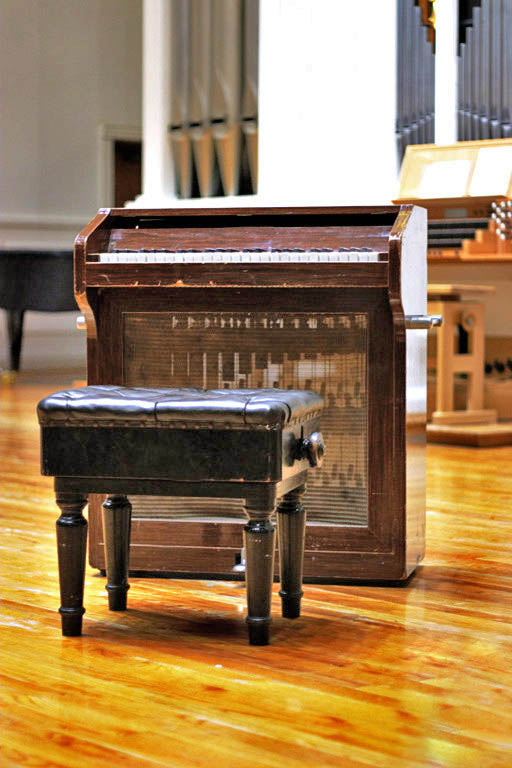
Das Girl aus Reihe 17“ ist ein gemütlicher Abend mit originalen Jazz-Songs der 20er, 30er und 40er Jahre mit Frederike Haas und Ferdinand von Seebach, mit authentischen 20er Jahre Tanzbewegungen. Das wohl berühmteste Lied „Puttin on the Ritz“ darf bei der Aufführung natürlich auch nicht fehlen. Ganz charmant mit einer schwarz-weißen Leinwand, einem alten Radio und einer Celesta lebt der Geist der 20er – 40er Jahre mit der Jazzgesellschaft von damals auf der Bühne neuerlich auf. 

 
vs


Kommentare

Facebook automatisch im meinem Facebook-Profil anzeigen
Twitter automatisch im meinem Twitter-Profil anzeigen 

die-frau.com
Forum der Rubrik Weiter nach alle
Gruppe der Rubrik Weiter nach alle
Buchclub
Buchclub
Für alle Literaturfans...
Anzahl Mitglieder: 15
Serienjunkies
Serienjunkies
Für Leute die süchtig nach Fernsehserien si...
Anzahl Mitglieder: 18
Musiker
Musiker
Für alle die Musik in all ihren Facetten li...
Anzahl Mitglieder: 13

Der Mann des Tages


Rezept der Woche

Zitronenmarmelade

Kolumne  
Marvel(lous)!

On Thursdays, we're Teddybear Doctors

Marvel(lous)!

Umfrage Weiter nach alle

Ich kaufe mir Kleidung...

Nützliche Adressen Verzeichnissuche